Introduction
Practical learning is one of the most effective ways to understand scientific concepts. Instead of only studying theories, students can build working models that demonstrate real-world applications of physics and electronics. Simple machines and electronic components are widely used in educational experiments to explain motion, force, and control systems. In this article, we will explore key components like motors and their role in educational experiments, along with ideas for building innovative projects for school exhibitions and science fairs.
DC Motor in Basic Electronics and Experiments
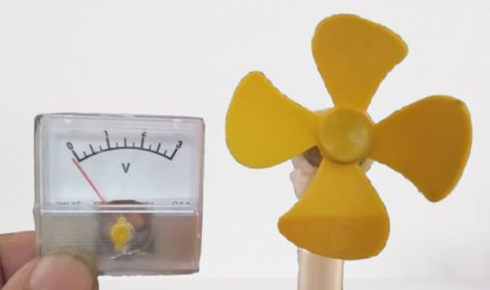
A dc motor is one of the most commonly used devices in physics and electronics projects. It converts electrical energy into mechanical rotation using magnetic fields. Students often use DC motors in small fans, robotic vehicles, and rotating models. These motors are easy to operate and widely available, making them ideal for beginners. In physics experiments, they help demonstrate concepts such as electromagnetism, torque, and energy conversion. Their simple structure allows learners to understand how electrical input results in motion output in real-time systems.
Physics Project Ideas Using Motors and Circuits
A physics project is a great way for students to apply scientific theories in practical scenarios. Projects involving motion, force, and energy are especially popular in school exhibitions. For example, using a DC motor to create a rotating platform can demonstrate circular motion, while adding gears can show mechanical advantage. Students can also experiment with speed control using resistors or variable power supplies. These projects help in understanding Newton’s laws, electrical circuits, and energy transformation in an interactive and engaging way.
Science Project for Innovation and Learning
A science science project allows students to explore creativity while applying scientific knowledge. These projects can range from simple models to advanced prototypes depending on the level of study. Motor-based projects are especially effective because they are visually engaging and easy to demonstrate. For instance, building a mini conveyor belt or robotic arm helps students understand automation and mechanical movement. Science projects also improve problem-solving skills, teamwork, and presentation abilities, which are essential for academic growth and future engineering studies.
Servo Motor in Robotics and Automation
A servo motor is a highly precise rotational device used in servo motor robotics, automation, and control systems. Unlike normal DC motors, it allows accurate positioning and controlled movement. It operates using feedback systems that adjust its angle based on input signals. In educational projects, servo motors are commonly used in robotic arms, camera positioning systems, and smart doors. They help students understand advanced concepts like feedback control, pulse width modulation (PWM), and automation technology, making them ideal for modern STEM learning.
Importance of Hands-On STEM Learning
Hands-on experiments play a major role in strengthening scientific understanding. When students build working models using motors and circuits, they learn how theoretical concepts apply in real life. These activities encourage curiosity, creativity, and logical thinking. Working with components like DC and servo motors helps students understand how machines are designed and controlled. This practical approach to education also prepares students for careers in engineering, robotics, and technology-driven industries.
Conclusion
Modern education emphasizes practical learning and innovation. Components like DC motors and servo motors are essential tools in understanding motion, control, and energy conversion. Physics-based and science projects provide students with opportunities to explore real-world applications of classroom knowledge. These experiments not only improve technical understanding but also inspire creativity and problem-solving skills. As technology continues to grow, hands-on science projects will remain an important part of learning and innovation for future generations.