Running a business involves hundreds of small decisions every day. From keeping equipment in good condition to maintaining a clean workspace and delivering a positive customer experience, even the smallest details can have a lasting impact. Water is one of those details that often goes unnoticed until something goes wrong.
Whether it’s a restaurant, hotel, manufacturing facility, office building, salon, or healthcare environment, water quality can influence daily operations in more ways than people realize. Poor water quality may contribute to equipment problems, unpleasant odors, mineral buildup, and unnecessary maintenance expenses. Having a reliable water system in place isn’t just about convenience; it can be an important part of running a business smoothly.
Why Water Quality Matters in Commercial Spaces
Commercial properties often use considerably more water than residential homes. Water may be needed for food preparation, cleaning, laundry, cooling equipment, production processes, employee facilities, and customer services. When water quality isn’t suitable for these activities, problems can quickly become noticeable.
Hard water, for instance, contains elevated levels of calcium and magnesium. Over time, these minerals can form scale inside pipes, boilers, dishwashers, water heaters, and other equipment. The buildup may restrict water flow and interfere with heat transfer, potentially increasing energy consumption and maintenance requirements.
Water quality concerns aren’t always visible, either. Excess chlorine can affect taste and odor, while sediment and other substances may create problems for certain applications. Understanding these concerns helps businesses make more informed decisions about water treatment instead of waiting for equipment failures or customer complaints.
Choosing Water Treatment That Fits Your Operations
Every business has different water requirements. A café may be concerned about coffee flavor and espresso machine performance, while a hotel might focus on guest comfort, laundry quality, and protecting its plumbing infrastructure. A manufacturing facility could require water with specific characteristics for a particular process.
That’s why water for business – reliable water treatment solutions should be approached with the actual needs of the operation in mind. A professional water assessment can identify hardness, sediment, pH levels, and other relevant characteristics. Based on the results, a business can determine whether filtration, softening, reverse osmosis, or another treatment technology would be appropriate.
There’s no reason to install a complicated system if a simpler option will do the job. The right solution should address real water problems, work consistently, and remain practical to maintain as the business grows.
How Water Softening Can Protect Commercial Equipment
Hard water is a common concern in commercial environments, particularly where equipment uses heated water regularly. Mineral deposits can accumulate in boilers, commercial coffee machines, dishwashers, steam equipment, and other appliances. Even a relatively small amount of scale can become troublesome when it develops repeatedly over months or years.
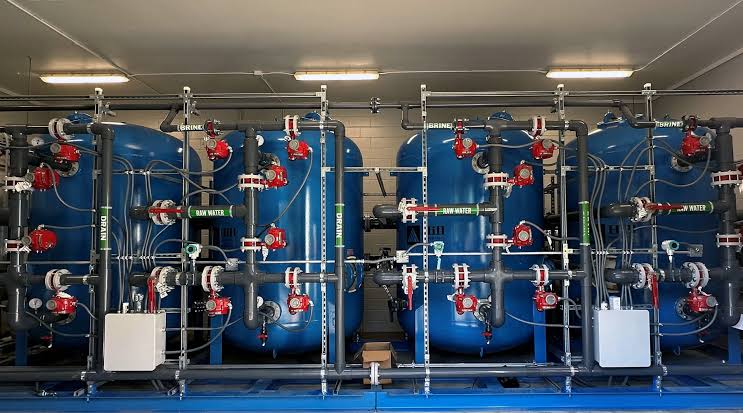
Installing commercial water softeners can help reduce hardness minerals through ion exchange, which replaces calcium and magnesium ions with sodium or potassium ions, depending on the system configuration. This process helps limit scale formation and can make water more suitable for many commercial applications.
For businesses with high water consumption, properly sized equipment is essential. A softener that works well in a small office may not be capable of handling the demands of a busy restaurant or industrial facility. Capacity, flow rate, regeneration frequency, water usage patterns, and available installation space all need to be considered.
Regular servicing is equally important. Salt levels, control settings, and system performance should be checked according to the manufacturer’s recommendations to ensure reliable operation.
Improving Customer Experience Through Better Water
Customers may not consciously think about water quality when visiting a business, but they can certainly notice the difference. A hotel guest expects a comfortable shower. Restaurant customers appreciate good-tasting drinking water, coffee, and tea. Clients visiting an office or showroom may notice whether the environment feels clean and well maintained.
Investing in better water for your business can support these everyday experiences. Appropriate filtration may improve taste and odor, while water conditioning can help reduce stubborn mineral deposits on faucets, glassware, and fixtures. In food service, suitable water quality may also contribute to more consistent beverage preparation and cleaning results.
These improvements don’t necessarily create dramatic changes overnight. Often, they’re reflected in fewer complaints, smoother routines, and a workspace that feels better cared for.
Managing Costs Without Compromising Performance
Water treatment should be viewed as a long-term operational investment rather than simply another expense. Preventing scale accumulation, reducing avoidable repairs, and improving equipment performance may help businesses manage maintenance costs over time.
However, it’s important to look beyond the initial purchase price. Installation, filter replacements, salt consumption, electricity, water usage, service visits, and expected equipment lifespan all contribute to the overall cost. A cheaper system that requires frequent repairs may not be the most economical option in the long run.
Business owners should ask practical questions before purchasing: How much water can the system handle? What maintenance is required? Are replacement parts readily available? Will the system accommodate future expansion?
Making Water Quality Part of Smarter Business Planning
Reliable water is an essential part of maintaining a productive, comfortable, and efficient commercial environment. It supports equipment, everyday cleaning, employee needs, and customer experiences, even when its contribution isn’t immediately obvious.
Businesses don’t need to overcomplicate the process. Start by understanding the water supply, identify the problems affecting daily operations, and select treatment equipment that addresses those specific needs. With proper installation and regular maintenance, a well-designed water treatment system can become a dependable part of the business rather than another thing to worry about.
Sometimes, the best operational improvements are the ones people barely notice because everything simply works as it should.