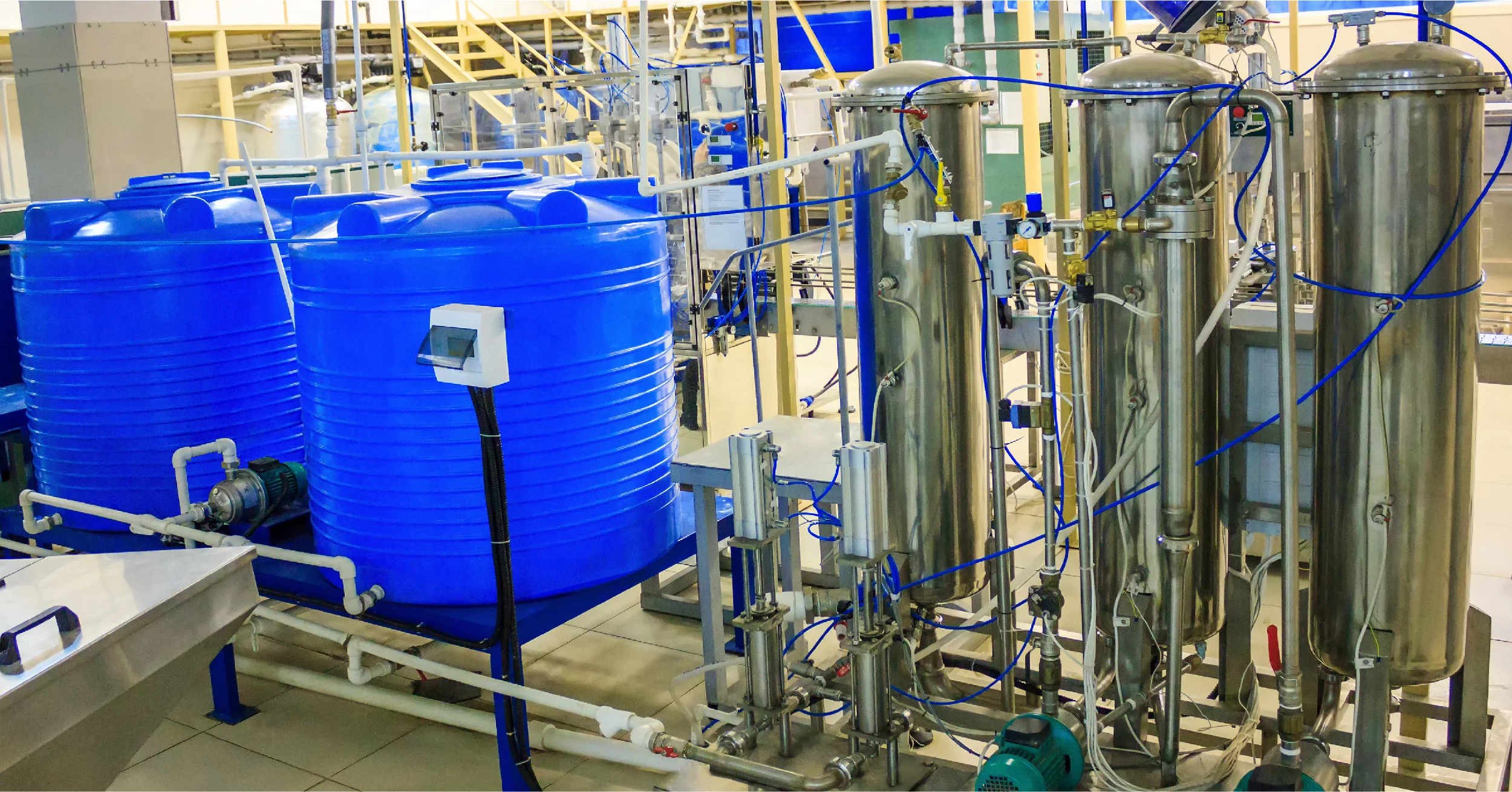
Water rarely gets a place on the list of things a business owner worries about. Sales, employees, customers, inventory, equipment, bills — those are the usual priorities. Water just comes out of the tap, does its job, and disappears down the drain.
Until it starts causing trouble.
A restaurant may notice cloudy glasses and stubborn spots after every wash. A hotel might find that shower fixtures need constant cleaning. In a manufacturing facility, mineral deposits can interfere with equipment that relies heavily on heated water. These problems often begin quietly, then become part of the weekly routine.
In many cases, the underlying issue is water hardness. The good news is that it can often be managed. The trick is choosing a treatment system that actually fits the business instead of buying whatever equipment happens to have the longest list of features.
What Makes Commercial Water Different?
Commercial properties can use vastly more water than a typical home. More people are using the facilities, more equipment is operating, and water demand can change dramatically throughout the day.
A small office might have relatively modest consumption. A restaurant can experience a rush of water use during preparation and cleanup. Hotels, laundries, apartment buildings, healthcare facilities, and industrial plants have their own patterns.
This is why commercial water softener solutions need to be designed around real usage.
A system should account for daily water consumption, peak flow, incoming hardness, available space, and the equipment that needs protection. Choosing a unit simply because it is labeled “commercial” isn’t enough.
The system has to keep up when demand is highest, not just when everything is quiet.
Why Hard Water Causes So Many Problems
Water hardness comes mainly from dissolved calcium and magnesium. These minerals occur naturally as water moves through soil and rock, so finding them in a water supply isn’t unusual.
The trouble begins when those minerals interact with plumbing and equipment.
Hard water can leave white deposits on faucets, showerheads, glassware, and other surfaces. More importantly for businesses, mineral deposits can accumulate inside water heaters, boilers, dishwashers, coffee equipment, and other appliances.
A busy restaurant, for example, may run its dishwasher dozens of times a day. If the incoming water is very hard, the amount of mineral exposure can be substantial.
That doesn’t mean every business with hard water needs a large softener. The actual hardness level and equipment requirements should guide the decision.
Scale Is More Than an Ugly White Spot
Most people first notice scale because it looks bad. But visible deposits are really just the part you can see.
Inside equipment, mineral deposits can form on heating elements and internal surfaces. Over time, this can affect heat transfer and equipment performance.
For a business, even a small efficiency problem can matter when the equipment operates every day.
Consider a commercial water heater that supplies hot water for a restaurant or hotel. If mineral deposits accumulate over time, maintenance may become more frequent and performance may suffer.
The exact impact depends on the equipment and severity of the water conditions, but controlling scale buildup can be an important part of protecting water-using equipment.
It’s not about making the water fancy. It’s about preventing a manageable problem from becoming an expensive one.
Start With a Water Test
Before choosing a softener, get a clear picture of the incoming water.
Testing can reveal hardness levels and other characteristics that might influence treatment. Depending on the property and water source, you may also want information about iron, manganese, pH, sediment, chlorine, dissolved solids, or other parameters.
This matters because softeners aren’t designed to solve every water-quality problem.
If a business has sediment entering the plumbing, for example, a sediment filter may be needed. If there’s a taste or odor concern, another type of filtration could be appropriate.
The water test gives you a starting point instead of relying on assumptions.
And that’s important when you’re spending business money.
Sizing the System Correctly
One of the most important parts of selecting commercial equipment is sizing.
A system that is too small may struggle during periods of high demand. It could require frequent regeneration and may not provide the expected level of treatment.
An oversized system, on the other hand, can increase the initial investment without offering meaningful benefits.
Look at both average consumption and peak demand.
For example, a hotel may have relatively low water usage during the middle of the day but experience a significant increase in the morning when guests shower and later in the evening.
A restaurant can have similar spikes around meal preparation and closing cleanup.
The system needs to be ready for those moments.
Regeneration and Salt Use
Traditional ion-exchange softeners use resin to capture hardness minerals. Once the resin becomes loaded, it needs regeneration.
Salt is commonly used in that regeneration process.
For commercial properties, this introduces an operational consideration: how often will regeneration occur, how much salt will be consumed, and where will it be stored?
A business should understand those requirements before installation.
Automated controls can make the process easier by initiating regeneration according to programmed settings or water usage. The right configuration depends on the system and application.
Don’t overlook the practical side of it. Someone still has to monitor supplies.
Think About Maintenance From Day One
A commercial softener is not a piece of equipment you install and forget about.
Resin performance, valves, controls, brine tanks, connections, and other components require attention. Routine inspection can help identify problems before they become major failures.
Ask the supplier about recommended service intervals and replacement parts.
It’s also worth finding out whether technicians are available locally and how quickly service calls are handled.
For a business, downtime can be far more expensive than routine maintenance.
A small service appointment is one thing. Losing access to essential equipment during the busiest week of the year is something else entirely.
Consider the Cost Beyond the Purchase Price
When comparing systems, don’t focus only on the equipment quote.
Consider installation, salt consumption, water used during regeneration, electricity where applicable, routine service, replacement components, and expected lifespan.
A system that costs slightly more upfront may prove more economical if it uses resources efficiently and is easy to maintain.
Likewise, a cheap system isn’t necessarily a bargain if replacement parts are expensive or service is difficult to arrange.
Think in terms of total ownership cost.
That’s a more useful number for a business than the initial invoice alone.
Not Every Business Needs the Same Setup
A small café and a large manufacturing facility shouldn’t be shopping from the same checklist.
The café may mainly want to protect coffee equipment and dishwashing systems. A hotel may need broader protection across numerous water-using fixtures. An industrial operation may have highly specific process-water requirements.
Some properties may benefit from whole-building softening. Others may be better served by treating water only where hardness creates the biggest problem.
There is no prize for having the biggest system.
The goal is to have the right one.
Ask Questions Before You Sign
A good water-treatment provider should ask plenty of questions before making a recommendation.
How much water do you use? What’s the hardness level? What is the peak flow? Which equipment is most sensitive? Where will the system be installed? Who will maintain it?
You should be asking questions too.
What does the warranty cover? How often is service needed? How much salt does the system typically use? What happens if the control valve fails? Is emergency support available?
If the answers are vague, that’s worth noticing.
Better Water Can Mean Fewer Headaches
Water treatment isn’t usually an exciting business investment. Nobody celebrates when a softener arrives in the equipment room.
But the benefits can be very real.
Reducing hardness can help control mineral deposits, make cleaning easier, and protect equipment from unnecessary exposure to scale. It may also contribute to more predictable maintenance over time.
The important thing is to approach the decision sensibly.
Test the water first. Understand your usage. Calculate peak demand. Choose equipment that is properly sized. Consider maintenance and operating costs, not just the purchase price.
Most importantly, don’t buy a system simply because someone says it’s the “best.”
The best system is the one that fits your water, your facility, and the way your business actually operates.
Once it’s installed and properly maintained, the ideal commercial softener should fade into the background. Your staff shouldn’t have to think about it every day.
They should be busy doing what they do best — running the business.